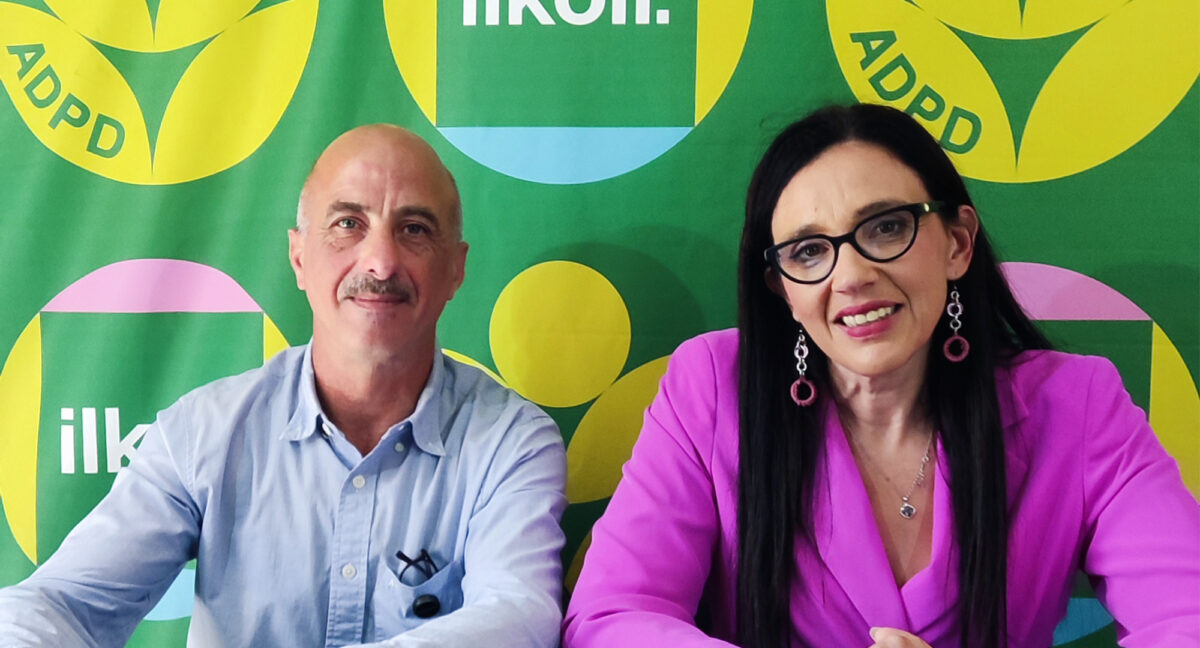
Iċ-Chairperson ta’ ADPD-The Green Party, Sandra Gauci (u kandidata fuq is-6 u t-12-il distrett), u Marcus Lauri, membru tal-eżekuttiv u kandidat fuq l-10 distrett, indirizzaw konferenza stampa dwar il-politika marittima u t-trasport.
Marcus Lauri qal:”Il-ħarsien tal-ibħra tagħna hu ta’ importanza kbira għal Malta. Il-baħar mhux biss riżorsa għas-sajd industrijali u artiġjanali, u għall-akkwakultura, imma jsaħħaħ il-prodott turistiku tagħna. Fl-istess ħin, Malta hi ċentru internazzjonali għax-shipping, bunkering, kummerċ, trasport u loġistika. Ir-rabta tal-gżejjer Maltin mal-baħar hija parti mill-identità tagħna.
“Kulħadd jista’ jara b’għajnejh li l-baħar ta’ madwarna jinsab taħt theddid kontinwu, kemm mit-tniġġis kif ukoll minn attivitajiet ta’ iżvilupp urban u turistiku u mill-bidla fil-klima.”
“Illum il-politika marittima taqa’ taħt ministeri differenti, mingħajr koordinazzjoni xierqa u effettiva. Politika marittima ffukata tfisser żvilupp aħjar tal-ekonomija blu, tal-akkwakultura u tas-sajd, kif ukoll ħarsien aħjar taż-żoni marittimi estensivi, inklużi dawk f’ibħra internazzjonali, il-kosta u żoni ta’ importanza ekoloġika speċjali. Aħna nipproponu li l-politika marittima tinġabar taħt segretarjat jew ministeru wieħed.”
“Fuq livell Ewropew u internazzjonali, Malta għandha tkun fuq quddiem nett fid-dibattitu marittimu. B’mod partikolari, Malta għandha tinsisti għal regolamenti kontra t-tniġġis tal-baħar, li jsaħħu l-ambjent marittimu u jissalvagwardjaw is-sajd sostenibbli u artiġjanali. Mingħajr aktar dewmien, għandna nimplimentaw b’mod effettiv il-liġi dwar id-Dominju Pubbliku sabiex jiġi żgurat l-aċċess għall-kosta. Il-kosta ilha snin jiġi kummerċjalizzat, u l-aċċess għall-pubbliku qiegħed dejjem jonqos. Dan mhux aċċettabbli.”
Sandra Gauci tkellmet dwar l-isfidi tat-traffiku u tal-mobilità. Qalet: “Għandna kriżi ta’ mobilità. Din mhix sempliċiment problema ta’ konvenjenza, iżda problema strutturali li qed taffettwa l-ekonomija, l-ambjent fejn ngħixu u s-saħħa tagħna.”
“Malta għandha waħda mill-ogħla rati ta’ karozzi per capita fl-Ewropa. Nofs il-vjaġġi huma inqas minn 15-il minuta u jistgħu jsiru bil-mixi, bir-rota, trasport pubbliku jew b’mezzi oħra sostenibbli. Imma għandna bżonn bidla fil-mentalità – “modal shift” – fejn nifhmu li hemm modi aħjar kif nivvjaġġaw. Fuq hekk għandu jisħaq il-gvern.”
“Kif rajna b’għajnejna stess l-proġetti infrastrutturali f’toroq ġodda li jiswew mijiet ta’ miljuni forsi jnaqqsu l-konġestjoni temporanjament, iżda fi żmien qasir din terġa’ lura għal li kienet jew saħansitra agħar minn qabel. Ejjew ngħidu l-affarijiet nkif inhuma. Ejjew ngħidu l-verità. Il-problema reali hija waħda: id-dipendenza fuq il-karozza privata, li hija riżultat ta’ snin ta’ politika ħażina li tat prijorità lill-karozzi privati, injorat l-alternattivi u żviluppat l-ispazju urban madwar il-karozza. B’konsegwenza ta’ dan, il-karozza qed titqies bħala neċessità anke għal distanzi qosra ħafna.”
“Għandna wkoll l-problema kbira tal-bankini, li huma spazji pubbliċi, li qed jittieħdu minn imwejjed u siġġijiet, b’konsegwenza li n-nies ikollha timxi fit-triq, fejn tkun esposta għal perikli bla bżonn. Dan jolqot b’mod partikolari lill-persuni vulnerabbli, bħall-anzjani u persuni b’diżabilità. Is-soluzzjoni tinsab f’aktar toroq magħluqa għat-traffiku matul is-sena kollha (pedestrianisation) u bankini riservati għan-nies.”
“It-trasport pubbliku għandu jkun is-sinsla tas-sistema tat-trasport. Sabiex in-nies jużawh aktar, is-servizz irid ikun aħjar u aktar effiċjenti mill-użu tal-karozza privata. Dan jista’ jseħħ permezz tal-proposta tagħna ta’ Bus Rapid Transit System (BRT), b’korsiji ddedikati, servizz aktar mgħaġġel, frekwenti u affidabbli. Il-proposta tagħna tista’ titwettaq fi żmien relattivament qasir, b’infiq raġonevoli u li jiffranka miljuni kbar meta mqabbla ma’ proġetti massivi ta’ toroq u flyovers. Dan kien ukoll il-parir mogħti lill-Gvern fl-2007 minn konsulenti internazzjonali mħallsa mit-taxxi tagħna. Dan kollu l-gvernijiet tagħna ilhom jafuh mill-2007.”
“Ma dan inżidu rotot sikuri għal dawk li jridu u jifilħu jużaw ir-roti u roti elettriċi. Il-problema mhux li n-nies ma jridux, imma li jħossuhom f’periklu fit-toroq tagħna invażati bil-karozzi. Hemm bżonn ukoll li f’toroq residenzjali u fil-qalba tal-bliet u l-irħula tiġi infurzata veloċità baxxa biex in-nies iħossuhom siguri. Irridu ambjent aktar sigur u jiġu żviluppati ‘low traffic neighbourhoods’.”
“L-alternattivi hemm qegħdin, li jonqos huwa l-kuraġġ politiku, li l-oħrajn m’għandhomx.”
“Malta għandha għażla: tkompli fuq triq li wasslet għall-konġestjoni, jew tibdel id-direzzjoni. Ejjew nagħżlu mobilità sostenibbli, fejn in-nies jiġu qabel il-karozzi.”
***
Grabbing the bull by the horns for sustainable mobility
ADPD-The Green Party Chairperson Sandra Gauci, candidate for the sixth and twelfth districts, and Marcus Lauri, executive member and candidate for the tenth district, addressed a press conference on maritime policy and transport.
Marcus Lauri said that safeguarding our seas is very important for us Maltese. The sea is not only a resource for recreational and commercial fishing, and aquiculture, but also is key to our tourism sector. At the same time, Malta is an international centre for shipping, bunkering, commerce, transport, and logistics. Malta’s ties to the sea are part of our identity.
Safeguarding our seas should be given the importance it deserves in our politics, because the seas are under constant threat of pollution and unsustainable practices, due to urban and touristic development as well as climate change, which threaten the fragility of their ecosystems.
At the same time, it is good to take every opportunity that the seas offer us for the benefit of the country. Therefore, maritime policy should be managed by a secretariat or ministry solely responsible for this and not as it is currently fragmented. A focused maritime policy means better management of the blue economy, aquaculture and fisheries, as well as better protection of our extensive maritime zones, including those in international waters, the coast, and other zones of ecological importance.
On a European and international level, Malta should be at the forefront of maritime debates. As a member of the EU Council, Malta should insist on regulations against sea pollution, strengthening maritime pollution and safeguarding sustainable fishing.
Without any further delays, we should implement effective laws on the public domain to protect and ascertain access to the coast. The coast has been commercialised for many years, and public access is diminishing year on year. Working with fishermen and coastal communities is essential for the protection of biodiversity, the fight against climate change, and the safeguarding of recreational and sustainable fishing.
Sandra Gauci tackled mobility and transport. “We have a mobility crisis. It is not an issue of convenience, but a structural problem that is affecting our economy, our environment and our health.”
Malta has one of the highest rates of cars per capita in Europe. Half of our trips are less than 15 minutes and may be accomplished by other sustainable means, such as cycling and walking, and public transport.
We need a change in mentality, a “modal shift”. The infrastructural projects for new roads, costing hundreds of millions of Euros, only serve to reduce congestion temporarily, which then rebounds in a very short period of time, with an even worse outcome.
The real problem is one: dependency on private vehicle use, the result of years of bad policies giving priority to the use of private cars, ignoring alternative means of transport and car-centred urban development. As a consequence, the private vehicle is considered a necessity even for very short distances.
Pavements, which are public spaces, are being taken over by chairs and tables, resulting in pedestrians having to walk in the streets, and in the process exposing them to unnecessary dangers. The solution is pedestrianisation and ensuring pavements are reserved for people.
Public transport should be the backbone of our country’s mobility strategy. For people to use this service, it must be improved and more efficient than private car use. This can be done through our proposal of the Bus Rapid Transit System (BRT), with dedicated lanes, with faster, more frequent, and more affordable service.
The BRT system can be done within a short time period, at a reasonable cost, and in the process saving millions of Euros when compared to projects like massive flyovers and roads. This was the advice given to the government in 2007, following consultation with foreign experts paid through our taxes.
Commuting by bicycle or pedelec is another alternative means of transportation, particularly suited for short distances. There are people who wish to cycle and are able to commute by bicycle or electric bicycle. The issue is that they do not feel safe on our roads. If dedicated lanes for bicycles cannot be included for one reason or another, the maximum speed for cars in urban and residential zones should be reduced to create a safer environment. We also call for the creation of “low traffic neighbourhoods”.
We can reduce the number of cars on our roads by creating realistic alternatives. The alternatives are there. It is the political courage which is lacking.
Malta has a choice: either carry on with the policies that have created congested roads, or change direction. Let’s choose sustainable mobility, where people are prioritised over cars.

