Carmel Cacopardo
We will not solve the traffic congestion problem unless we address its fundamental cause: over the years we have become dependent on private cars. There is a reason for this dependency, but it remains the basic problem which must be addressed.
For far too long we did not have a reliable public transport service. It has definitely improved but it takes ages to build trust where none existed. Government’s policy decision to introduce free public transport was a bold step. On its own, however, it was insignificant. It needed to be coupled with other transport policy initiatives with one clear objective: reducing dependency on the private car. The carrot on its own is insufficient. At times it has to be accompanied by the stick. Policy initiatives to discourage private car ownership and use are long overdue.
In Malta all our localities are very close to one another. As a result, around 50 per cent of private car trips are for short distances having a duration of ten minutes or less. This is part of the background information forming part of the Transport Masterplan funded by EU Regional Development Fund and published by the government ten years ago.
This basic truth clearly points towards the need to establish, and where necessary reinforce, local and regional public transport as a realistic and sustainable alternative to the private car. Such an initiative would need to be buttressed by the removal of fuel subsidies, the introduction of parking meters and gradually increasing the pedestrianization of our localities. This would be a reasonable start. The objective should be to discourage the use of the private car by ensuring that those who opt to use it pay its full costs instead of shifting these costs onto the community. A major bonus would be that we can reclaim our streets which have been taken over completely by cars.
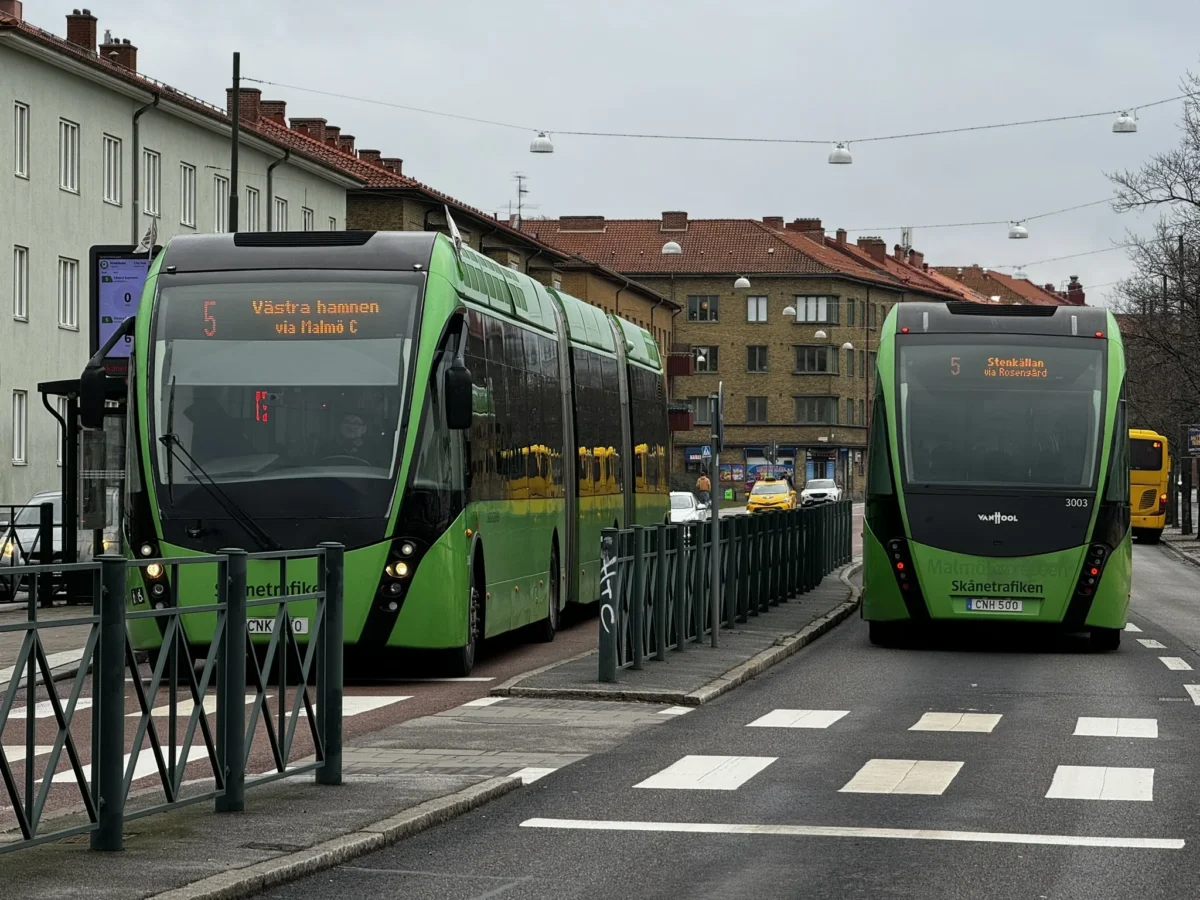
Linked to such an exercise we need to introduce a bus rapid transit system (BRT), the most logical option applicable to the local circumstances to address mass transportation. Gradually introducing bus priority lanes, and ensuring that they are only used by buses, could be a good start to embed efficiency and reliability in public transport.
The basic characteristics of a BRT ensure lanes dedicated to buses, not obstructed by parked cars or other vehicles, off-board fare collection, bus priority at all turning points and platform-level boarding. The implementation of these features does not require years of planning time or massive investment. This signifying that implementation is possible over a short time frame and at a manageable expense.
Starting along main routes the implementation of a BRT can be gradually spread to reach all localities. It would require an insignificant investment compared to the billions required for a metro, which in 2019 was estimated to cost €6.2 billion. Adjusting for today’s costs and cost overruns (which we are accustomed to in this part of the globe), a preliminary estimate could be substantially higher. Obviously, a different price-tag could result if the design is changed as has been indicated earlier this week by the Prime Minister.
One needs to also point out that planning the required tunnelling for a metro would also have to address the lack of accurate geological data. Planning a metro in the absence of a regularly updated Geological Service could lead to tunnel collapse, possible deaths, as well as substantial cost over-runs.
For the record, some may need reminding that an 8-kilometre tunnel between the Delimara and Marsa power stations commissioned around 17 years ago encountered such a collapse which, according to information in the media, had then resulted in a doubling of the cost of the entire project. Even then tunnelling was done in the absence of adequate geological information. Fortunately, no deaths or injuries were reported.
Even if one opts for a metro, notwithstanding the excessive cost and lack of suitable data on the basis of which one can plan adequately, we still have to address car dependency. The metro (or the tram, with or without tracks) depends for its viability on its use by a substantial number of passengers on a regular basis. A considerable number of car owners would have to give up their regular use of a private car permanently, otherwise there is no possibility of attaining any level of viability in the preferred mode of mass transport.
Having said all this, in the local circumstances the Bus Rapid Transit system is the logical solution for our traffic congestion. This was a proposal which was explained in detail in the Halcrow Report delivered to the Maltese Government in June 2007. The report, which was ignored by the PN Ministers of Transport, is entitled Malta Bus Rapid Transit Feasibility Final Report. It emphasised that “the public transport network could play an increasingly important role in encouraging journeys to be made by modes other than the private car.”
This is a proposal to bring about a behavioural change: a change which cannot and will not develop overnight. It will take time “to encourage a modal shift to more sustainable modes of travel.” Carrots will undoubtedly be of help to achieve the modal shift: inevitably however the use of the policy stick to penalise those who are not willing to change is also inevitable. This is why various jurisdictions utilise environmental charges and taxes: to facilitate the behavioural change we so desperately need.

published on The Malta Independent on Sunday: 26 October 2025

