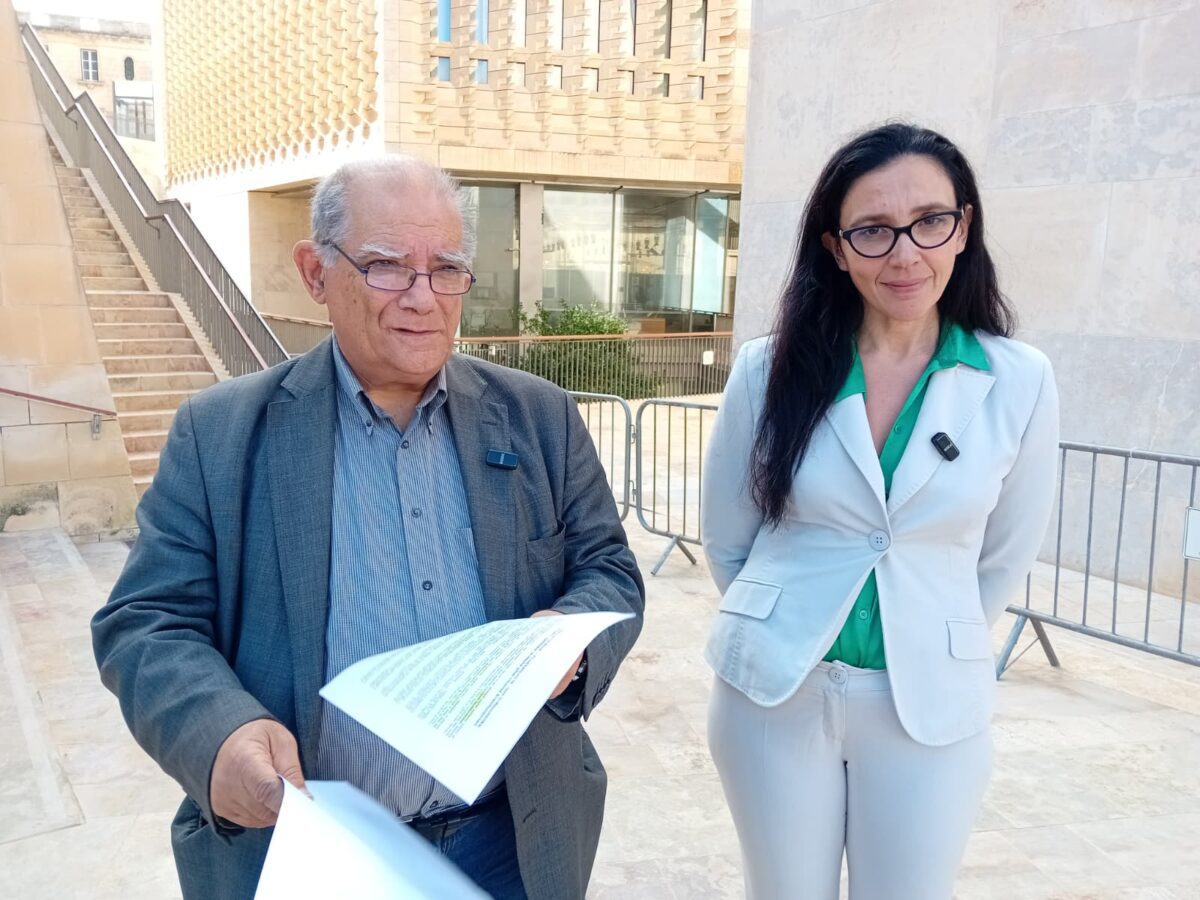
Carmel Cacopardo
Obstructions on pavements nullify pedestrian mobility rights, primarily those of the most vulnerable amongst us. One of the primary culprits of this land grab is the catering industry. This is occurring as a result of various catering establishments taking over pavements and obstructing them with tables and chairs.
In a number of localities pedestrians are encountering considerable difficulties in navigating around obstacles on the pavement. The plight of residents is even worse. Entrances to blocks of flats are encumbered, throughout the day, as a result restricting the access of residents to their own home. The simple task of placing household waste on the pavement is rendered very difficult. There is the added issue, encountered in many cases, of the difficulty in accessing residential units when making deliveries of large objects, such as furniture and white goods. The land grab makes access in these instances practically impossible. Access would be even worse in case of emergencies. The civil protection authorities need to wake up to this developing reality which has already featured in a number of incidents in both Malta and Gozo.
What is worrying is that all this has been facilitated by the Planning Authority. At times through development permits which it issued, at other times through a lack of enforcement action.
This has been going on for a considerable time. Much before Covid19. I would say that the policy for placing of chairs and tables on pavements has been designed specifically to facilitate this land grab. This was done through the exclusion of the representatives of the Local Councils from the inter-Ministerial Committee set up by government to draft the relative policy document. I had pointed this out in these columns in an opinion piece entitled Ignoring Residents and their Local Councils (TMIS 13 September 2015) when commenting on the consultation exercise way back in 2015. I had then drawn attention that “surely the use of public open spaces by catering establishments is a matter which is of considerable interest to local councils as it affects both the councils and the residents they represent. Yet the government has a different opinion as representatives of local councils were not invited at the drawing board where the guidelines on the use of public open spaces by catering establishments were being drafted.”
The holder of political office who was in charge of the development of this mess was the then Minister for Tourism, Edward Zammit Lewis. He ensured that business interests were prioritised over the welfare of both residents and pedestrians.
This is the background to the Ombusdman’s position paper on the need to ensure safe and unobstructed mobility for all, published earlier this month. The Office of the Ombudsman was acting after its attention was drawn by the Commissioner for Older Persons “on the need to ensure safe and unobstructed mobility for older persons in public spaces and on public pavements.”
The Ombudsman’s position paper makes interesting reading particularly by its incisiveness. The Ombudsman emphasises that the issue is not “a technical question of urban design but is becoming all the more a core human-rights observance matter.”
This is not the first time that the Ombudsman has commented and presented recommendations on the matter. This is however the first time that the matter is focused upon as an issue of rights.
Public space belongs to everyone. When business practices are allowed to trespass on and grab public space, this is a trampling upon the fundamental right of access and mobility rights. In such circumstances business practice must give way to the exercise of the fundamental right of unhindered mobility for all, in particular for the mobility of the vulnerable. This is a ten-year land grab which must be reversed the soonest.

Carmel Cacopardo is ADPD-The Green Party’s Deputy Chairperson
First published in The Malta Independent on Sunday: 18 January 2026

