Carmel Cacopardo
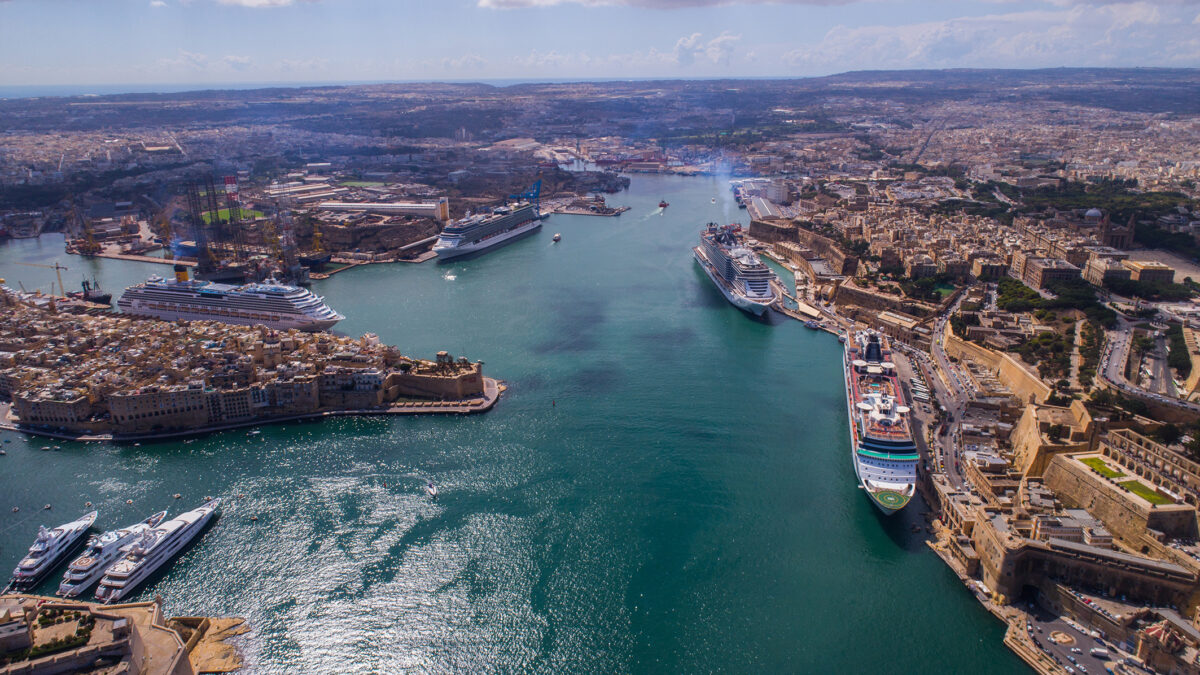
The proposal for the regeneration of the Grand Harbour is welcome news. Various worthwhile initiatives have been undertaken to revive the Grand Harbour in the past 40 years. Unfortunately, these initiatives were generally focused on specific sites without any effort being injected to produce a vision for the Grand Harbour viewed as a whole.
Among past noteworthy initiatives at various points of the Grand Harbour, one must necessarily point towards the rehabilitation of the Knights Hall, now the Mediterranean Conference Centre, the Pinto Stores Area, now the Valletta Waterfront, and the revived Cottonera Waterfront.
Two of the primary jewels in the Grand Harbour are Fort St Elmo and Fort Ricasoli, at the entrance to the Grand Harbour itself.
The upper part of Fort St Elmo was restored and is accessible to all, facilitating its appreciation. The lower part of the Fort, however, is not in such a good state, it has been ignored and as a result is deteriorating at an accelerated rate. Parts of the Fort will soon be beyond repair, possibly lost forever. A development brief for Fort St Elmo was published by the Planning Authority many years ago, only to be practically ignored. Nothing much came out of it except the possibility of developing a hotel on the Evans Laboratory site. The conclusions of the tender issued in respect of this hotel are still being contested.
In respect of Fort Ricasoli, parts of it are slowly crumbling into the sea, soon to be lost forever. Fort Ricasoli has been used and abused for ages by the government film agency without any effort being ever made to apply part of the revenue generated, which the film industry continuously boasts about, into basic maintenance and restoration of the fort.
The presentations through which the regeneration exercise was launched clearly indicate that what is being labelled as the regeneration of the Grand Harbour is in fact primarily a regeneration of the Marsa segment of the harbour, consolidating the Marsa power station area and the area used for the unloading and storage of merchandise along the coastline, including the so-called potato shed area, catapulted into the news in the last years.
The activity along the Marsa segment of the Grand Harbour has declined considerably over the years, this being also in part the result of a substantial part of it migrating to the Freeport Terminals at Kalafrana, Birżebbuġa. The number of buildings along the Marsa Grand Harbour coastline, as well as slightly inland, which, as a result have fallen into disuse and the inevitable state of dilapidation, are substantial.
The regeneration exercise should start examining these individual buildings, a number of them of considerable size. The potential which a re-use of these buildings can contribute to the revival of the area is substantial. An active participation by all stakeholders would undoubtedly contribute to an environmental uplift of the area as well as a social revival of the local communities mostly impacted through the neglect accumulated over the years.
The residential communities should be at the centre of the regeneration drive.
This regeneration exercise is planned to develop over a fifteen-year timeframe and will focus on the Marsa power station site, the quays at Marsa and the overlying Floriana bastions, notably the area known as Crown Works. No reports or drawings are so far available detailing the proposals. The video presentations available on the government consultation site indicate open public spaces, a yacht marina, hotels, offices and possibly a housing development in the Marsa Jesuit Hill area.
This is the second time in the last 5 years alone that a consultation exercise to regenerate the inner Grand Harbour Area has been launched. I sincerely hope that the current consultation would be more successful than its predecessors, all of which were stillborn.

Carmel Cacopardo is ADPD-The Green Party’s Deputy Chairperson
First published in The Malta Independent on Sunday: 15 February 2026

