We need to re-establish our roots…
Carmel Cacopardo
The current emphasis on increasing access to public open spaces makes a lot of sense. It has the potential to contribute to the enhancement of our quality of life. We need to re-establish our roots where they belong: as close as possible to nature. We belong to the natural world, of which we are an integral part. If, in addition to providing public open spaces in our urban areas, we also protect the open spaces which nature itself provides, it would be even better!
There is no substitute to the natural open spaces, those which nature itself provides. We should strive to ensure a constant interaction with a natural countryside, provided to us by nature, free of charge. The Planning Authority has been an absolute failure in this respect.
Our continuous contact with nature in its authentic unspoilt form helps us stay healthy. Pollution, on the other hand, is an obstacle in our endeavours to lead a healthy life.
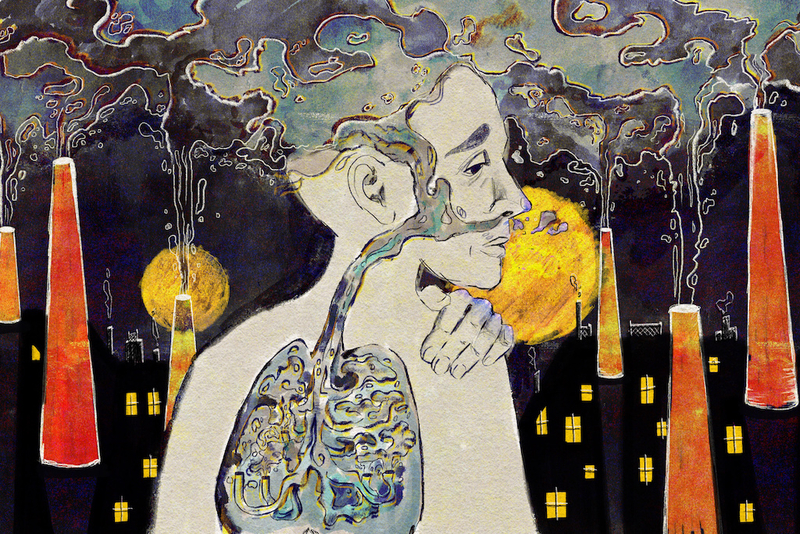
Pollution spoils the natural environment in various ways: through particulate or gaseous emissions to air, through discharges into the marine environment as well as through the generation of noise. This has a considerable impact on our health. It is not always easy to realise that we are being impacted, until, maybe it is too late. Research tracks human activity and the resulting pollutants. In the process it helps us to understand real impacts on the eco-system as well as on all those dependent on it.
A briefing by the European Environment Agency, published last week, emphasised that current scientific evidence establishes a link between environmental pollution and a higher risk of mental health issues. The published briefing-note alerts policy makers to a number of key messages resulting from the scientific evidence being reviewed.
Environmental pollution contributes to a range of mental health issues. Studies specifically indicate that air pollution in the form of particulate matter, very fine particles, less than 2.5 microns in diameter, referred to as PM2.5, and nitrogen dioxide, are associated with depression and depressive symptoms.
Aircraft and road traffic noise may also be associated with an increased risk of depression and anxiety, especially those in vulnerable groups.
Exposure to lead, second hand smoke, and other chemicals, especially in the developmental life phases, may increase the risk of mental health issues later in life.
The achievement of zero-pollution targets can deliver benefits both for mental health and well-being. We can support mental health through nature-based solutions.
In my weekly contributions to these columns, I have addressed a number of these issues. These vary from transport policy and the number of cars on our roads to the noise generated by a number of economic operators such as the Freeport Terminal, the Malta International Airport and the entertainment industry.
The above quoted briefing note of the European Environment Agency should be an eye opener to those gloating on the economic successes of the Malta Freeport, the Malta International Airport and the entertainment industry. Their environmental impacts diminish both our quality of life as well as our well-being. Maybe it is about time that they start considering the extent to which the noise pollution which they generate has an impact on the health of those residing close to the Freeport or to the Airport. A number of residents of Birżebbuġa in the Tal-Papa Housing Estate, for example, reside immediately below the final part of a flight path leading to Malta’s International Airport. Unfortunately, these Birżebbuġa residents are also simultaneously impacted by the noise generated by the operations of the Freeport Terminals.
In various localities, the entertainment industry is not just the cause of nuisance to residents well into the silent hours. It also has an impact on our health and well-being. Irrespective of whether the noise generators are on land or on the sea. The Noma Island controversy will certainly add to the ever-increasing problem.
I am aware, professionally, that the Freeport Terminal Management has for the last number of years been addressing this issue through various measures and initiatives. There is, however, a limit as to what can be achieved at source both at the Freeport Terminal as well as at the Airport.
There are other (additional) measures which can be considered. One can consider limiting the noise generating activity. The airport does not normally operate at night. There is however no similar limit on the Freeport’s operations. This has contributed continuously to a degradation of the quality of life of Birżebbuġa residents.
It is about time that these impacts are studied medically. Such studies would be of considerable help in informing policy makers of the need to act concretely in addressing specific issues probably contributing to mental health risks.
This is another aspect which Vision 2050 ignores. At ADPD we have spoken clearly about this over the years. Policy makers cannot keep ignoring constructive criticism. Pollution definitely fuels mental health risks. We are paying a price for all this: a degradation of our quality of life and well-being.
Prevention is always better than cure.

Carmel Cacopardo is ADPD-The Green Party’s Deputy Chairperson
published in The Malta Independent on Sunday: 15 March 2026
Cover picture credit: OONA TEMPEST / KFF HEALTH NEWS ILLUSTRATION

