Carmel Cacopardo
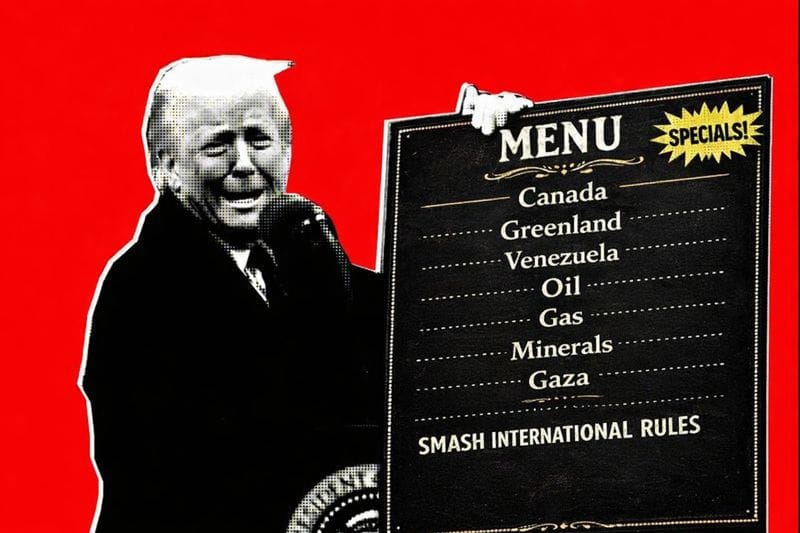
In Davos, last Tuesday, at the World Economic Forum, Canadian Prime Minister, Mark Carney, spoke of the developing rupture in the global order. It is a clear discourse underlining the need for a principle-based multilateralism, pointing out that those who are not at the table, may be on the menu at some point in time.
Whatever is on the menu is then carved out amongst the mighty, because in the developing international scenario, might is right. This is nothing new, it has always been the underlying rule of international relations, even though, at times it was less obvious than it is at this point in time.
The US has been carving up what it considers to be its menu, Latin and Central America, as of late extending its grip up to the Arctic. China has for years been focusing its attention on Taiwan, and it is only a matter of time when this will materialise.
Closer to home, Ukraine is the principal item on the menu. Possibly to be followed by the Baltic states. This is what motivates the russophobic spirit which has fuelled the eastward expansion of NATO since the collapse of the Soviet Union. It is also what motivates the current attitudes in the European Union whose membership substantially overlaps with that of NATO. 23 out of the 27 EU member states are NATO members: Malta, Cyprus, Ireland and Austria being the odd ones out.
Being around the EU table reduces the possibility of ending up on the menu, but this is, however, in no way guaranteed.
The founding fathers of the EU designed the European project as one of peace. Over the years, however, there have been various attempts at transforming the EU from a civilian power into a military one. The creation and development of EU Commission defence responsibilities being an integral element of this exercise.
A civilian power is one which relies on peaceful means to pursue its foreign policy objectives and develop its influence on a global level. It favours diplomacy, dialogue, multilateralism, economic cooperation, development aid, conflict prevention and resolution and peacekeeping, as its contributions to international peace and security.
In contrast a military power emphasises the strength of its armed forces, a forceful reminder of its deterrent capabilities.
Defence in the EU is a responsibility of the individual member states. Time and again a proposal to set up an EU army surfaces. This would however require unanimous agreement which I think is not possible at this point in time.
Currently EU member states cooperate through the PESCO initiative (Permanent Structured Cooperation) as a result of which they seek to deepen defence cooperation.
The EU is currently in a state of ambiguity on issues of defence. With 23 of its 27 member states being also NATO members it is also clear where the pressures lie.
Although no public explanations were forthcoming, it is crystal clear that the approval of associate member status for Malta within NATO’s Parliamentary Assembly is a response to these pressures. Unfortunately, Parliament just rubberstamped the proposal, in the process utilising just 69 seconds of parliamentary time. The decision was characterized by a complete absence of Parliamentary debate, with the Parliamentary Opposition agreeing to the proposal, in silence.
The member states of the EU have a different perspective of defence issues. On their own the Baltic states consider themselves helpless and part of the menu when faced by their menancing neighbour. An attitude shared by Sweden and Finland when they ditched their neutrality and opted to join NATO in the aftermath of the Russian invasion of Ukraine.
Malta’s neutrality makes sense in a rules-based international order. Countries much larger than ours have had second thoughts in view of the increased prevalence of might over right. Maybe Parliament in Malta would come to its senses and start a long overdue debate on Malta’s security and defence. A debate which should take stock of the situation and realise that if we do not actively sit around the table, sooner or later, Malta too may be part of the menu.

Carmel Cacopardo is ADPD-The Green Party’s Deputy Chairperson
First published in The Malta Independent on Sunday: 25 January 2026

